The first ten minutes after a pipe bursts
What you do before the plumber arrives decides how much drywall and flooring you lose. Work through these in order.
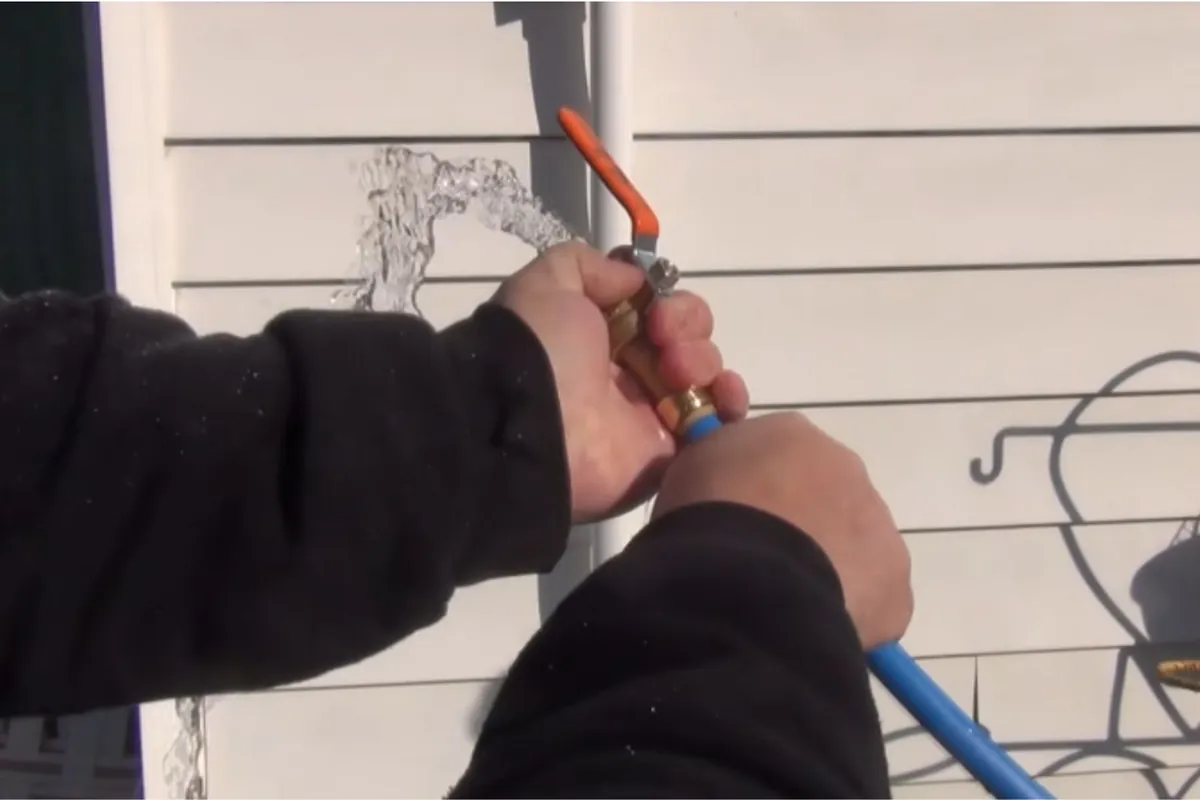
- Close the main shutoff. In most Meridian homes it is in the crawl space or in a closet, often near the water heater.
- If you cannot find it, the curb stop at the meter box can shut water to the whole property, but it may need a meter key.
- Open a faucet on the lowest floor to drain pressure from the lines.
- Turn off breakers for any rooms where water reaches outlets or light fixtures.
- Switch the water heater to pilot or turn off its breaker if the main will be off for a while.
- Photograph the damage before cleanup for your insurer.
If the burst is on the city side of the meter, call Meridian Water at 208-888-5242. Anything past the meter toward your house is a job for your plumber.
What a 24/7 burst pipe call looks like
When you call, the first questions are where the water is coming from and whether the main is closed. If you cannot find or turn the main, the plumber on the phone walks you through it before anything else.
On arrival the job is to find the split, cut out the damaged section, and restore water to the house the same night where the pipe can be reached. A line buried in a finished ceiling may need a temporary cap first so the rest of the home has water.
Once the leak is stopped, the next call is about drying. Our water mitigation line handles extraction separately from the plumbing repair.
Why pipes burst in Meridian homes
Cold is the leading cause here. Meridian sits in the high desert, and winter nights regularly drop well below freezing. Pipes in crawl spaces, exterior walls, garages, and attic runs are the ones that freeze. The split usually shows up when the pipe thaws and pressure returns, which is why many burst pipes are found in the morning.
Many newer Meridian homes are built over crawl spaces rather than full basements. A crawl space vent left open in January, or missing insulation on a line near the foundation, is enough to freeze a supply pipe during a cold snap.
The other causes are age and pressure. Older copper can develop pinholes that finally give way, and a fitting on PEX can let go if it was not crimped correctly. High street pressure without a working pressure regulator also stresses every joint in the house.
New construction is not immune. Homes in their first few winters in Star split pipes for the same reasons, usually an open crawl space vent or a hose left on a spigot.
Freeze bursts are an Ada County winter pattern, and they turn up as often in newer homes north of Chinden as in older houses near Old Town Meridian.
Freeze bursts are reported from every part of town, including the newer subdivisions near Discovery Park on Lake Hazel Road and the older streets around Kleiner Park.
How each pipe type gets repaired
The fix depends on what your home is plumbed with. Most Meridian homes built since the late 1990s use PEX, while older homes may have copper or CPVC.
| Pipe type | Common failure | Usual repair |
|---|---|---|
| PEX | Split from freezing, failed crimp or clamp fitting | Cut out the damaged section and join new PEX with fresh fittings. |
| Copper | Split from freezing, pinhole leak | Solder or press-fit a new section, check nearby pipe for thinning. |
| CPVC | Cracked from freezing or brittle with age | Replace the section, and look for more brittle pipe nearby. |
| Galvanized steel | Rusted through at threads | Replace the section, often with PEX, and discuss wider replacement. |
Typical repair approach. The plumber confirms the pipe type on site.
A single split is a quick repair. If the plumber finds several weak spots in the same run, replacing that whole run can cost less than returning for the next failure.
When the leak is a valve, not the pipe
A lot of burst-pipe calls turn out to be a valve that failed: the shutoff behind the washer, an angle stop under a sink, or the main valve itself snapping when someone tries to close it. Older multi-turn valves seize after years without use, and forcing them is when they break.
If a valve breaks, close the next valve upstream, which is usually the main. A failed main valve means the water has to be shut off at the meter, and we will walk you through it on the phone.
Replacement valves are quarter-turn ball valves that close in one motion and are far less likely to seize. When one valve in an older home has failed, it is worth asking about the others on the same visit.
The pipe is fixed. What about the water?
A plumber stops the leak and restores water to the house. Drying soaked drywall, subfloor, and insulation is a separate job with its own equipment. If water spread beyond a small puddle, especially into walls or under flooring, it needs professional drying to prevent mold.
Our water damage restoration page explains how that cleanup works and who handles it. The plumbing repair itself is priced and handled on this call.
Once the house has water again, check under sinks and around the water heater for any slow drips. A sudden pressure return can reveal a second weak joint that had been hiding.
Preventing the next burst
Most freeze bursts in Meridian are preventable with a few fall habits.
- Disconnect garden hoses before the first hard freeze so frost-free hydrants can drain.
- Close crawl space vents in winter and check that pipes near the foundation are insulated.
- Keep the garage door closed during cold snaps if pipes run through it.
- Leave cabinet doors open on exterior walls so warm air reaches the pipes.
- When leaving for a trip, keep the heat at 55 degrees or higher and consider shutting off the main.
Our frozen pipe repair page covers what to do if a line freezes but has not split yet.
What changes the price of a burst pipe repair
Two bursts can look alike and cost very differently to fix.
- Where the pipe is, since a crawl space or inside a finished wall takes more work than an exposed line.
- The pipe material and how much of it is damaged.
- Whether drywall has to be opened to reach the break.
- Emergency hours versus a scheduled daytime repair.
- Any additional weak sections found during the repair.
Most homeowners policies cover sudden bursts. They usually exclude slow leaks and damage from neglect, so check your policy. For your price, call (208) 679-8357 and we will explain it before work starts.