Is it one drain or the main line?
This is the first question a plumber will ask, because the answer changes the tool and the price. One slow sink usually means a clog in that fixture's branch line. Several drains acting up at once points to the main line that carries everything out to the street.
- The toilet gurgles or bubbles when the washing machine drains.
- Water rises in the tub or shower when you flush a toilet.
- A floor drain or basement fixture has water or sewage coming up.
- More than one bathroom is slow at the same time.
- You smell sewage near a floor drain or the outdoor cleanout.
If any of those match, stop running water in the house. Every flush or load of laundry pushes more water toward a line that cannot drain it, and the lowest fixture is where it will come out.
Which clogs are worth a 24/7 call
A single slow sink can almost always wait for a daytime visit. A clog becomes an emergency when water is coming up somewhere it should not, such as a floor drain, a basement shower, or a toilet that rises when the washer drains.
Those are signs the main line is blocked, and every flush or load of laundry adds more water with nowhere to go. Stop running water in the house and call our 24/7 line at (208) 679-8357.
On a night call the plumber opens the line first so the house is usable again. If the clog looks like roots or a broken pipe, a camera inspection can follow in daylight, and you decide on that once the backup is cleared.
Why drains clog in Meridian homes
Meridian's water comes from city wells, and the 2025 water report puts hardness between 6.97 and 10.53 grains per gallon depending on your zone. That mineral content leaves scale on the inside of drain lines over the years. Scale gives grease, soap, and hair something rough to grab onto.
Kitchen lines clog most often. Cooking grease goes down warm and liquid, then cools and coats the pipe a few feet downstream. Add coffee grounds or rice and the opening shrinks fast. A garbage disposal does not change this. It only grinds the food smaller before it settles.
Bathroom clogs are mostly hair bound together by soap scum. Laundry standpipes clog from lint, especially on older homes without a lint trap on the washer outlet.
Main line clogs have different causes depending on the age of the house. In Old Town Meridian, older cast iron and clay pipe can let tree roots in at the joints. In newer subdivisions with PVC laterals, the usual cause is something flushed that should not be, like wipes labeled flushable, or a low spot in the pipe where waste settles.
Clogs follow house age in Garden City too, where many 1950s and 1960s homes still drain through the original clay or cast iron lateral.
Grease and scale clogs are just as common in Ada County's newest subdivisions off Ten Mile Road as in older homes near Main Street, because the hard water is the same.
Kitchen-line clogs come in from every corner of the city, from Paramount and Lochsa Falls in north Meridian to the streets around Storey Park near downtown.
Kitchen sink clogs: the most common drain call
The kitchen sink clogs more than any other drain, because grease, food, and soap all go down it together and cool in the pipe. Where the water stops tells you a lot about where the clog is.
- One side of a double sink backs up and the other drains: the clog is in that side's trap or the disposal.
- Both sides back up together: the clog is past the trap, in the trap arm or the line inside the wall.
- The dishwasher leaves standing water and the sink backs up when it drains: the shared drain is blocked, not the dishwasher.
- The sink drains, but another fixture gurgles when it does: the blockage may be further down the branch line.
Skip chemical drain openers on a fully stopped sink, since they sit in the pipe and make the line hazardous to open. A cable through the trap arm clears most kitchen clogs, and grease-packed lines may need hydro jetting.
How we clear the line, and which tool fits which clog
The right machine depends on the pipe size, the pipe material, and what is causing the blockage. Using a too-small cable on a main line only punches a hole through the clog, which is why some drains clog again a week later.
| Method | Best for | What to know |
|---|---|---|
| Hand auger | Toilets, single sink traps | Fast and low cost, limited reach. |
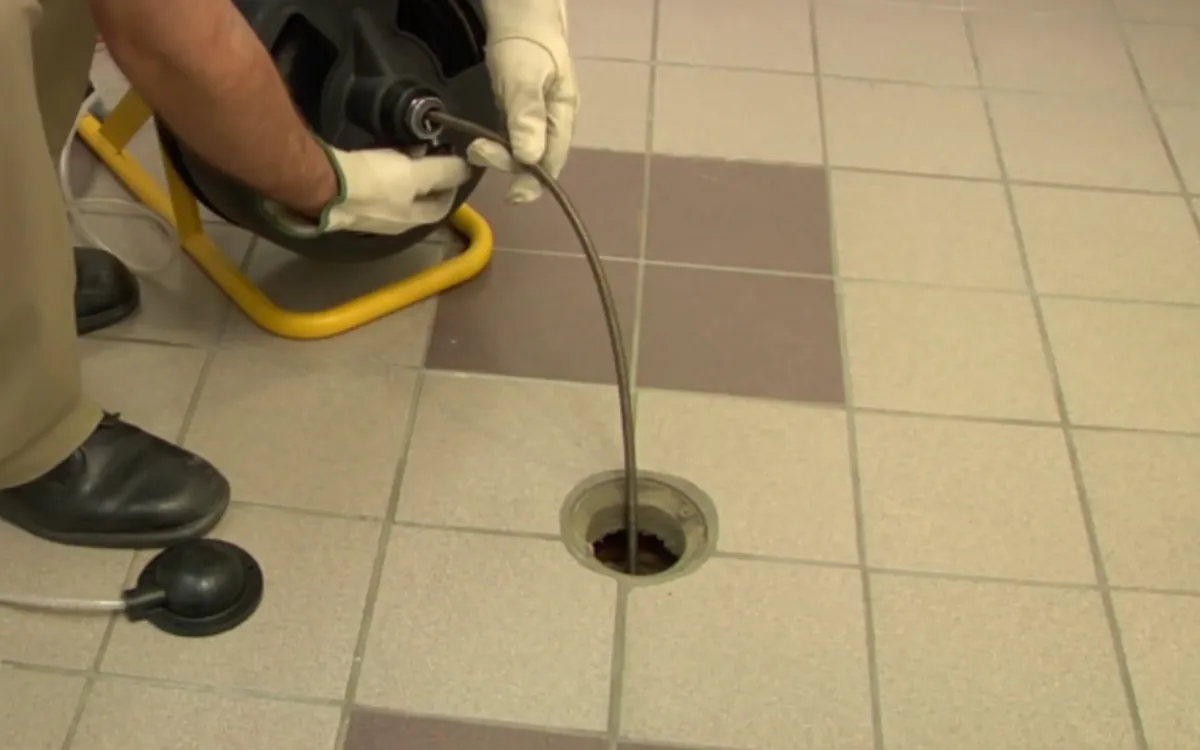
| Drum cable machine | Kitchen, laundry, and bath branch lines | Cuts through grease and hair in 1.5 to 2 inch pipe. |
| Sectional cable from the cleanout | Main line clogs, roots | Reaches 100 feet or more toward the street. |
| Hydro jetting | Grease, scale, and roots that return | Scours the full pipe wall, not just a channel. |
| Camera inspection | Repeat clogs, older homes | Shows cracks, roots, and low spots before anyone guesses. |
Methods a plumber may use. The choice is explained before work begins.
When a main line clears but the cause is unclear, we recommend running a video camera inspection while the line is open. It adds some time to the visit, and it tells you whether you are looking at a one-time clog or a pipe problem.
Shower and tub drains, and drain pipes that leak
Shower and tub drains clog with hair and soap scum held together by hard water scale. Pulling the stopper and clearing the first few inches by hand fixes many of them, and a small cable handles the rest without removing the tub.
A drain pipe that leaks is a different problem from one that clogs. Water under a sink cabinet, a stain below a tub, or a drip in the crawl space when a fixture drains usually means a loose slip joint, a cracked trap, or a failed joint in the drain line. Those are repaired by replacing the section, and the leak is easy to confirm by running one fixture at a time.
When a clog keeps coming back
One clog is usually bad luck. Three clogs in the same line within a year usually means something physical is wrong with the pipe.
The common culprits are roots growing through a joint, a belly where the pipe has settled and holds standing water, or a crack that catches debris. None of those can be fixed with a cable. Clearing the line buys time, but the clog will return.
The honest next step is to look inside the pipe. If the camera shows a broken or separated section, that becomes a sewer line repair conversation, which could be a spot repair or a lining depending on the damage.
What affects the price of drain cleaning
We do not quote a flat number over the phone for every clog, because two calls that sound the same can be very different jobs. These are the factors that move the price.
- Access. A clean, reachable cleanout is quicker than pulling a toilet or working through a roof vent.
- Location of the clog. A branch line is less work than a main line 60 feet out.
- Time of day. After-hours emergency visits cost more than a scheduled daytime appointment.
- Whether a camera inspection is added to confirm the cause.
- What the line is made of and whether it needs jetting instead of a cable.
Homeowners insurance rarely pays for clearing a clog, though it may help with damage caused by a sudden backup. Want your real number? Call (208) 679-8357 and describe the problem, and we will give you a price before any work starts.
What to expect after the line is cleared
A cleared drain should run fast and quiet. A few checks in the following days tell you whether the fix will last.
- Run hot water for a few minutes in each fixture that was affected.
- Listen for gurgling at nearby toilets and tubs, which can mean the main is only partly open.
- Watch floor drains and the lowest fixture for any slow return of water.
- If a camera was run, keep the video with your home records.
If the same line slows down again within a month, that is a sign of buildup or pipe damage the cable could not remove, and it is worth asking about jetting or a camera look before the next backup.
Keeping Meridian drains clear between visits
Wipe greasy pans with a paper towel before washing them. Put a strainer in every shower. Run hot water for 30 seconds after using the disposal so food moves all the way down the line.
If you know where your sewer cleanout is, keep it uncovered by bark, gravel, or landscaping. The Uniform Plumbing Code (UPC), which Idaho's plumbing code builds on, requires cleanouts to stay accessible for exactly this reason. The City of Meridian maintains the sewer in the public right of way, but the lateral on your property is your responsibility, and a clear cleanout makes every future service call faster.
Chemical drain openers are worth skipping. They rarely clear a real blockage, and they leave caustic water sitting in the pipe for the plumber to work around.