My water bill went up and I can't find a leak. What now?
This is the most common way a hidden leak shows itself. Nothing is dripping, no ceiling is stained, but the bill from the City of Meridian is higher than last month with no change in how the household uses water.
The leak could be a running toilet, a line under the house, the service line in the yard, or a sprinkler zone that never fully shuts off. The steps below narrow it down before anyone brings in equipment.
Larger lots on the edges of Kuna come with longer service lines, which is where slow underground leaks hide the longest.
Long service lines on larger Ada County lots south of Meridian, and older lines near Old Town, are where slow leaks tend to hide longest.
Hidden leaks show up as high bills everywhere from Spurwing and Paramount to the streets around Settlers Park, and the meter test works the same way in each.
When a hidden leak becomes an emergency
Most hidden leaks are slow, and a daytime appointment is fine. A leak turns urgent when water is dripping through a ceiling, spreading across a floor, or running loudly somewhere you cannot see.
In those cases, close the main shutoff and call our 24/7 line at (208) 679-8357. Stopping the water comes first, and pinpointing the exact spot can follow once the house is safe.
If the main is off and the meter still spins, the leak is on the yard side between the meter and the house. That changes which crew and which equipment you need, so mention it on the call.
The meter test you can do in ten minutes
Your water meter is the best leak detector you own. It usually sits in a covered meter box near the street.
- Turn off every faucet, the dishwasher, the washer, and the sprinkler system.
- Open the meter box lid and look at the dial and the small leak indicator.
- If the indicator is turning, water is flowing somewhere.
- Close your main shutoff at the house and check again.
- If it stops, the leak is inside the house. If it keeps moving, the leak is between the meter and the house.
If you are unsure which side of the meter a problem is on, call Meridian Water at 208-888-5242. Leaks between the meter and your house are the owner's responsibility and are covered on our water line repair page.
Rule out the easy leaks first
Before paying for detection equipment, check the places that leak most often in any home.
- Put a few drops of food coloring in each toilet tank. Color in the bowl after 15 minutes means a leaking flapper.
- Listen for a toilet that refills on its own between flushes.
- Check under every sink and behind the washing machine for damp cabinet floors.
- Look at the base of the water heater and the relief valve discharge pipe.
- Walk the yard for a green, soggy strip in dry weather, which can point to the service line or a sprinkler leak.
A running toilet can waste far more water than most people expect. If the dye test finds one, toilet repair is usually a quick fix.
How a hidden leak gets pinpointed
When the simple checks come up empty, these tools let a plumber find the leak with little or no demolition.
| Method | How it works | Best for |
|---|---|---|
| Pressure test | Isolates sections of piping and watches for pressure drop | Confirming which part of the system leaks. |
| Acoustic listening | Ground microphones pick up the sound of water escaping a pressurized pipe | Lines under floors, slabs, and yards. |
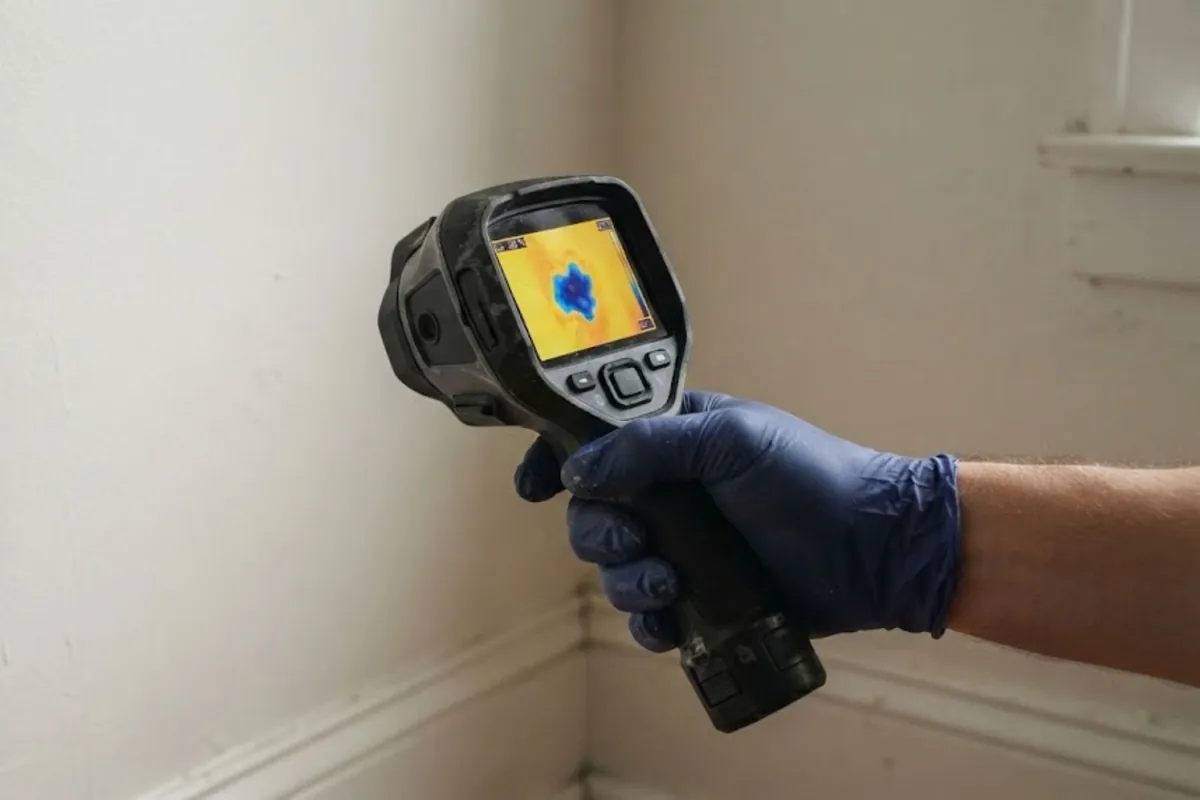
| Thermal imaging | Shows temperature differences from wet or warm areas | Hot water leaks and wet spots in walls and ceilings. |
| Moisture meter | Measures dampness in drywall, wood, and flooring | Mapping how far water has spread. |
| Line tracing | Locates the path of buried pipe | Finding the service line or a sprinkler main. |
Methods used depend on the pipe, its location, and the symptoms.
Once the leak is marked, you get a clear repair recommendation and price. Only then is the wall, floor, or yard opened at that spot.
Where leaks tend to hide in Meridian homes
In homes built over crawl spaces, a leaking supply line can drip onto the soil for months before anyone notices. The usual clues are a musty smell, higher humidity in the house, or a meter that never stops.
Garages hold the water heater and laundry lines in many Meridian homes. A slow leak at a fitting there may only show up as a damp spot under stored boxes.
Outdoors, sprinkler systems are a frequent source of high bills. A zone valve that does not fully close, or a cracked line after a freeze, can run all night. If your sprinklers are on city water, that shows up on your meter.
A water stain on the ceiling or a wet wall
A brown ring on a ceiling under an upstairs bathroom is one of the most common leak calls in Meridian's two-story homes. The water you see has usually travelled along a joist or pipe before it showed, so the stain is rarely directly under the leak.
- Note when the stain gets wetter. After a shower points to the shower valve, drain, or grout. After a toilet flush points to the wax ring or supply.
- If it drips constantly whether or not anything upstairs is used, a pressurized supply line is the likely source.
- Push gently on the stain. Soft, sagging drywall can hold water, so put a bucket under it before it lets go.
- Do not cut a large opening to look. A moisture meter and thermal camera can map the wet area through the drywall first.
Once the source is marked, the opening is cut to fit the repair. Our pipe repair page covers the fix itself when it turns out to be a split supply line.
Leaks under the house: crawl space detection
Most Meridian homes sit over a crawl space, and a supply or drain line leaking there can run for months without a single wet spot inside. The usual clues are a musty smell, windows fogging more than usual, a vapor barrier with water pooled on top of it, or a meter that never stops.
The first job is telling a plumbing leak from groundwater. In summer, canal seepage can raise the water under some neighborhoods, which is a sump pump problem rather than a pipe. A plumbing leak usually leaves a wet trail back to one line, and the meter test confirms it.
Detection in a crawl space is mostly hands and eyes, helped by a moisture meter and, for a hot line, a thermal camera. Tell us how tall the crawl space is when you call, since a low space changes how the work is done.
Sprinkler, pool, and hot tub leaks
Whether a sprinkler leak shows on your water bill depends on where the system gets its water. The City of Meridian does not own or operate pressurized irrigation, and most of those systems run on ditch water, so a leak there wastes irrigation water but does not move your meter. Sprinklers tied to city water do move the meter, and a zone valve that never fully closes can run all night.
Signs of an irrigation leak include one patch of lawn that stays green and soft in a dry spell, a zone with weak heads, or water in the valve box. Turning the irrigation system off and repeating the meter test shows whether it is part of the problem.
Pools and hot tubs lose water to evaporation, so a drop is not always a leak. A bucket test, with a marked bucket set on a step beside the marked pool level for a day, separates evaporation from a leak in the shell or plumbing. Spa and pool equipment leaks at the pump and heater are often visible once the pad is checked.
What affects the cost of leak detection
Detection is priced separately from the repair, because finding the leak and fixing it are different jobs.
- How much of the system has to be tested to isolate the leak.
- Which equipment is needed, from a simple pressure test to acoustic and thermal work.
- Access to crawl spaces, ceilings, and yard lines.
- Whether the repair is done on the same visit.
- Emergency timing if water is actively damaging the home.
Call (208) 679-8357 with what you have noticed, and we will explain the likely approach and price before starting.